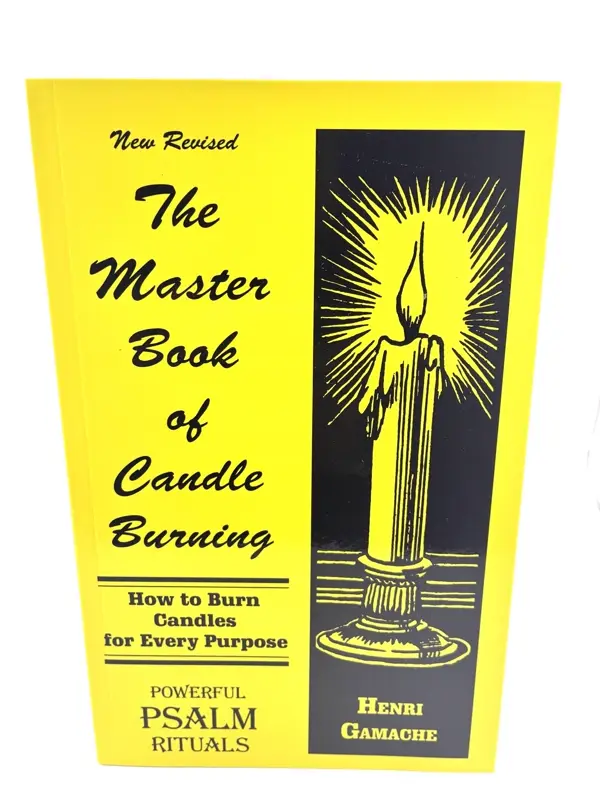
The Master Book of Candle Burning
In stock at Atlanta and Decatur.
What this is
A candle. The flame is the working — it is lit, watched, and allowed to finish.
The practice
What this tradition does with an object like this — how it is used, not a promise about what follows.
How it is used
- 1Name what it is for, once and plainly.
- 2Dress it if you are going to — oil first, then herb or powder.
- 3Burn it somewhere level and out of the draft, and let it finish rather than relighting it across days.
Waxing moon to draw, waning to remove.
Working it properly
The craft under the instructions — direction, count and order. This is the part that is normally only said across a counter.
- A shorter candle is for one sitting rather than a week. It is lit, worked and allowed to finish in the same session, which makes it the candle for a specific request rather than a standing one.
- Petition paper still goes underneath. The size of the candle changes the duration, not the method.
- Dressed base to wick to draw, wick to base to send away — the same direction rule as the seven day glass.
What completes the working
A working is a ladder, not a single object. Each rung below says what the addition does, and shows what Yeye's Botanica carries for it.
what dresses it; without a dressing it is an unaddressed candle
the surface is wiped down before the candle is set on it
What people get wrong
- Blowing it out instead of snuffing it.
- Setting it where it has to be moved. A candle is meant to end where it started.
Reading the glass afterwards
- Clean glass, steady flame, wax gone
- Read as a working that met nothing in its way.
- Black soot up one side
- Read as resistance — traditionally taken as a sign to clear before setting another.
- Soot at the top only
- Usually just the wick catching up at the start. Read as nothing much.
- Wax left in the bottom
- Read as work unfinished — many practitioners set a second candle rather than relight this one.
- The glass cracks
- Read as force taken by the glass instead of by you. It is also what happens when a candle burns in a draft, and the tradition says to check that first.
- Flame high and loud, then low
- Read as a fast start against something slower underneath.
This is what the tradition looks for, not a diagnosis. A wick sits off-centre, a draft moves a flame, and glass is uneven — most of what a candle does, it does for ordinary reasons.